
River Forest, IL is known for its estate-sized lots, established landscaping, and mature hardwood trees that have been part of the neighborhood for generations. Along streets such as Thatcher Avenue and Forest Avenue, many properties feature oaks, elms, and maples that now extend far beyond standard trimming height, which can create access issues and structural concerns. The network of tree care professionals in Oak Park knows how to evaluate aging canopy structure, address root pressure near walkways and foundations, and clear storm-damaged limbs from properties that need to stay safe and usable through the region's changing seasons.
That is one reason so many property owners in River Forest, IL rely on Arbor Tree Care to help keep their landscapes in good shape all year.
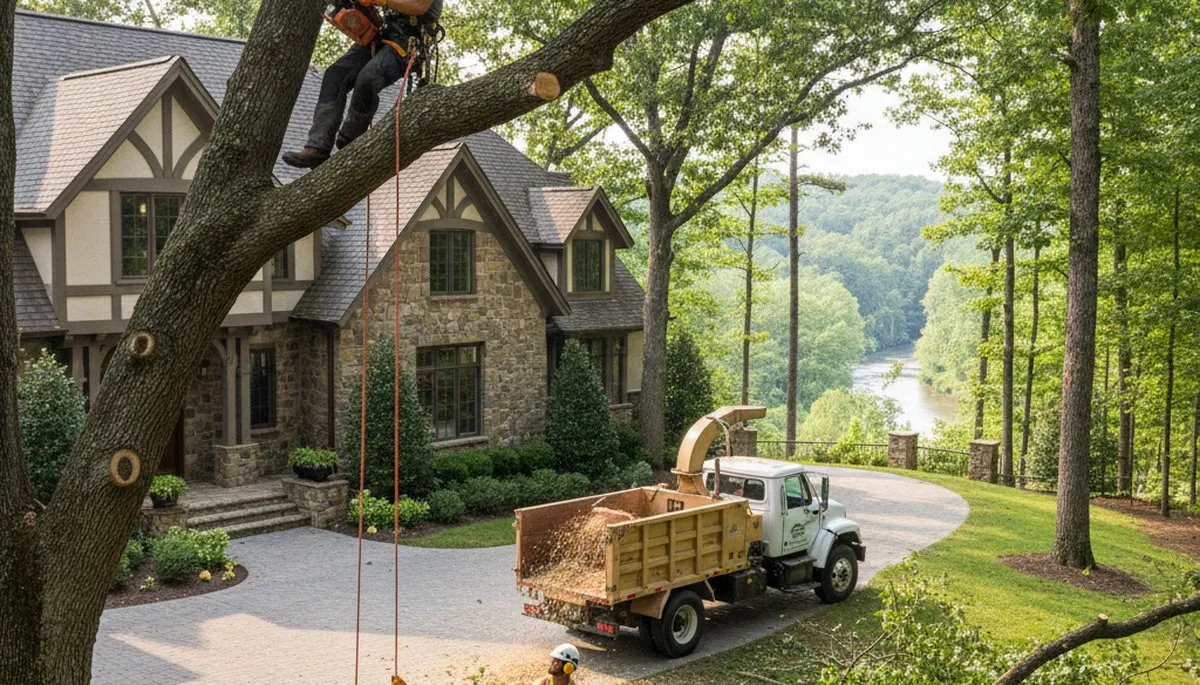

Prefer to Talk to An Expert?
(708) 294-2552
Why River Forest Property Owners Trust Local Professionals to Get It Right
With local experience and a strong understanding of the area, these professionals are familiar with the dense hardwood canopy, larger lot layouts, and utility corridor conflicts that come with River Forest properties. Every job is matched with the right equipment and methods for root pressure, canopy overhang concerns, and fungal disease patterns common in the Oak Park corridor.
From removing a large oak limb near the Concordia University Chicago campus to performing structural pruning along the narrow residential streets near Quick Street, each project is handled carefully with long-term tree health and property safety in mind.
If you care about the condition of your property, local contractors can help keep your trees balanced, stable, and safer through River Forest's demanding weather.
Our Tree-Service Services
in Oak Park, IL, Include
A Service Area Built Around Your River Forest Neighborhood
The layered canopy and estate-scale lot sizes in this neighborhood require tree service solutions that are tailored, not generic. That is why local professionals bring a custom approach to every property, whether the work involves tight rear-yard access or the removal of multiple trees.
It makes no difference if the property is a historic brick two-story home near Keystone Avenue, a newer build close to Lake Street, or a mid-century residence near the Des Plaines River greenbelt.
From tree pruning and stump removal to tree disease treatments and lightning protection, services are shaped around the neighborhood's character and each property's specific needs.
River Forest's Mature Urban Forest, Shaped by History
River Forest took shape in the late 1800s and early 1900s as a planned residential community, attracting architects and established families who favored spacious lots and substantial plantings. That history still shows up today in the broad canopy cover, root systems that press against older infrastructure, and years of delayed pruning that influence how tree work must be done now.
Aging Hardwood Structure and Canopy Overhang
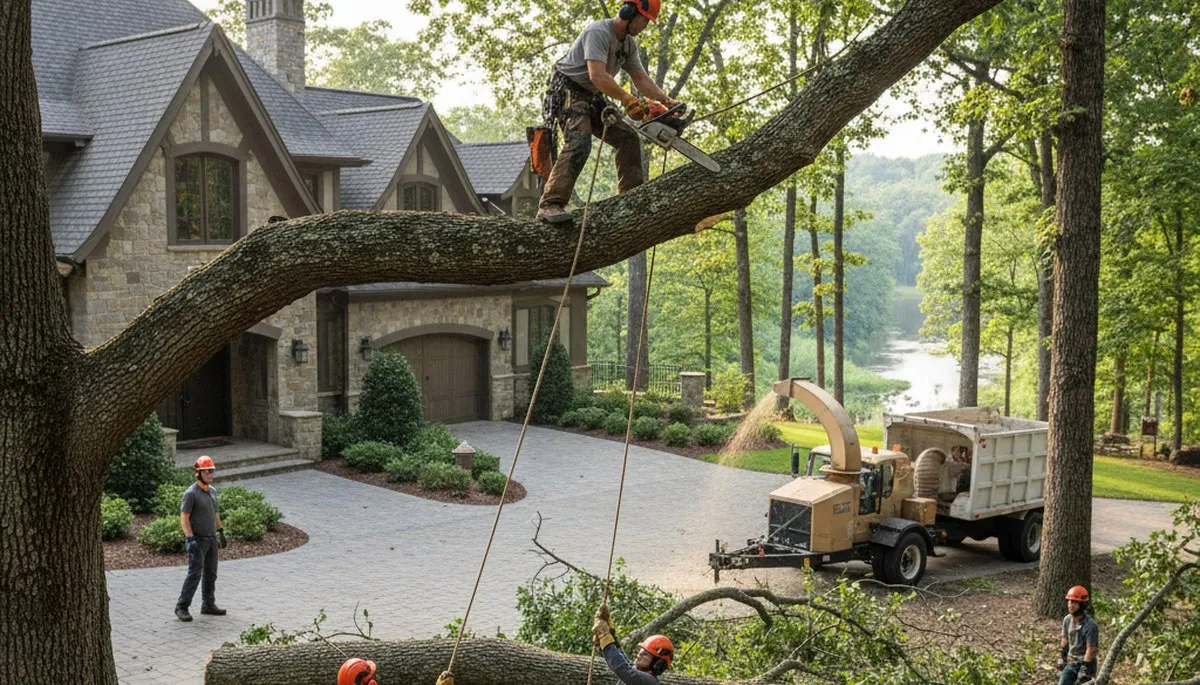
Many River Forest properties, especially along Lathrop Avenue and the western stretches near Thatcher Avenue, have oaks and maples that reach more than 80 feet tall with broad side branches. That can lead to canopy crossing property lines and heavy limbs hanging over roofs and driveways, which raises safety and access concerns during ice storms and high winds.
Local professionals reduce overhang problems with directional pruning, weight-reduction cuts, and cabling support systems that help limit structural stress and neighbor disputes.
Root System Conflicts Near Walkways and Foundations
The neighborhood's mature trees add shade and visual appeal, but their roots often spread beneath sidewalks, driveways, and foundation edges. Surface roots can push up pavement and contribute to moisture problems along basement walls.
Professionals address these issues with targeted root pruning, root barrier installation, and soil aeration methods that work with the existing root structure without undermining tree stability.
Dutch Elm Disease and Oak Wilt Pressure
Dense planting and limited air movement between mature trees have made many River Forest elms and oaks more vulnerable to fungal disease spread. Once infection starts, trees can decline quickly without early action, putting nearby healthy trees at risk across shared canopy areas.
Trusted pros respond with early disease identification, removal of infected tissue when appropriate, and soil-based treatment programs that support long-term canopy health and help slow neighborhood-wide spread.
Storm Damage from Midwest Wind and Ice Events
Because River Forest sits along the Des Plaines River corridor, properties can face strong wind channels and heavy ice buildup during winter storms, both of which can trigger sudden limb failure or complete uprooting on estate lots.
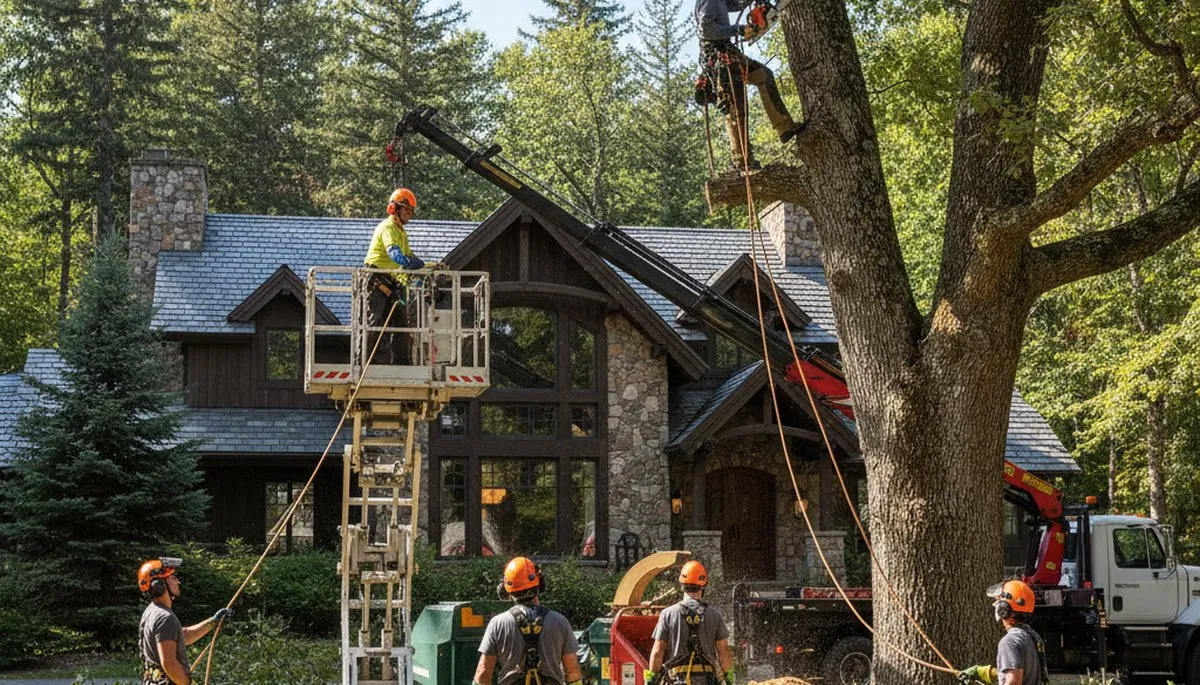
Experienced crews use aerial lifts, rigging systems, and controlled sectional removal techniques to protect property and clear roads, even under difficult post-storm conditions.
Constrained Rear-Yard and Alley Access
Narrow rear alleys and gated back yards are common in River Forest, so equipment setup and debris removal can be difficult without harming nearby fencing or landscaping.
Local pros rely on compact track loaders and hand-carry rigging systems, keeping surfaces protected and debris contained so the work fits the property without causing collateral damage.
For ideas on keeping your River Forest property in good condition year-round, request a free quote from a local professional in River Forest by calling (708) 294-2552. Every property deserves safe access. Let Arbor Tree Care help you maintain it!
Kick off your tree service project today!

Tree Services in River Forest, IL: Care for Every Season
From regular canopy maintenance to urgent storm response, here is how local pros help keep properties sound, healthy, and protected in every season:
Routine Tree Trimming and Pruning in River Forest, IL
- Canopy elevation trimming along Thatcher Avenue corridors to lift lower limbs and preserve clearance over driveways, sidewalks, and vehicle access routes without altering the established canopy form.
- Crown thinning for mature oaks and maples throughout the Lathrop Avenue residential area, improving airflow within the canopy and helping reduce fungal disease pressure in densely planted estate yards. Homeowners in nearby Riverside, IL face similar dense-growth conditions and benefit from the same airflow-focused pruning method.
- Structural pruning for young replacement plantings near the perimeter of Concordia University Chicago, helping establish strong branch structure early and reduce future storm damage and maintenance costs.
- Deadwood removal from established elms and maples near the Quick Street and Bonnie Brae Avenue intersections, removing brittle overhead limbs before winter ice adds extra failure risk.
- Pre-storm trimming and weight reduction cuts scheduled each fall across River Forest estate properties, helping reduce branch load on trees over rooftops and detached garages.
Schedule routine trimming before seasonal storms arrive to protect your River Forest canopy investment.
Tree Removal Services in River Forest, IL
- Hazardous tree removal from estate-scale rear yards along Forest Avenue, where oversized trees with weakened root systems can threaten fencing, outbuildings, and neighboring property lines.
- Storm-damaged tree removal after high-wind events that split crowns or topple trees across River Forest's larger residential lots, helping restore safe access quickly.
- Dead tree removal for elms and ashes that are no longer recoverable from Dutch elm disease or emerald ash borer infestation, reducing collapse risk and the chance of pest spread to nearby trees.
- Multi-tree removal projects near the edge of the Des Plaines River greenbelt, where aging cottonwoods and silver maples have reached the end of their useful life and need coordinated sectional removal.
- Removal of trees with invasive root systems that threaten foundation walls and underground utility lines in the older blocks between Lake Street and Chicago Avenue.
Timely removal of declining trees helps protect healthy canopy nearby and lowers liability across River Forest's densely planted properties.
Stump Grinding and Cleanup in River Forest, IL
- Stump grinding for large-diameter oak and maple stumps in front yards along Keystone Avenue, clearing surface obstacles and making room for lawn restoration or new planting without major excavation.
- Below-grade stump removal near sidewalk and driveway edges throughout the Bonnie Brae corridor, reducing root regrowth that can lift pavement over time.
- Multi-stump grinding projects after coordinated tree removal in estate rear yards, opening up the site for landscape changes without heavy equipment damage to surrounding turf.
- Debris hauling and site cleanup after stump grinding near the Concordia University Chicago border, leaving the area ready for replanting or hardscape work. Residents in Forest Park, IL also depend on careful post-removal cleanup for similar residential stump work.
- Root system excavation assistance for stumps located too close to foundation walls or underground drainage lines, where ordinary grinding depth could create structural or utility damage.
Stump removal frees up yard space and removes the decay and pest habitat that old stumps can introduce to River Forest properties. Prompt clearing also supports healthier soil conditions for any future trees planned for the site.
Emergency Tree Services in River Forest, IL
- 24-hour emergency response for fallen or leaning trees across River Forest homes after severe thunderstorms or ice storms, with crews ready to clear structures, driveways, and street frontages.
- Storm damage assessment and limb extraction from rooftops and fencing along the Thatcher Avenue and Quick Street corridors, where large canopy trees often lose major limbs during high winds.
- Emergency utility line clearance for trees or limbs that fall across power service drops or communication lines on River Forest estate properties, coordinated with utility providers for safe removal.
- Post-storm debris removal and site stabilization for properties near the Des Plaines River greenbelt, where channeled wind events can bring down large sections of mature riparian canopy onto nearby residential lots.
- Hazardous lean assessment and emergency bracing for storm-damaged trees that remain standing but still pose an immediate failure risk to buildings, vehicles, or walking paths.
Fast emergency response after a storm helps protect River Forest properties from added damage and restores safe access before the next weather system arrives.